

Dark patches that were not there a year ago. Post-breakout marks that linger for months. An uneven tone that no amount of foundation quite conceals. If hyperpigmentation has become a frustration in your skincare routine, you have likely encountered niacinamide on your search for solutions. But does this ingredient actually live up to its reputation? The clinical evidence is surprisingly compelling, and understanding exactly how niacinamide targets pigmentation can help you use it more effectively.
How Niacinamide Works Against Hyperpigmentation
Niacinamide, also known as nicotinamide or vitamin B3, does not work like most brightening ingredients. While many depigmenting agents target melanin production directly by inhibiting the enzyme tyrosinase, niacinamide takes a different approach. It intervenes at the transfer stage.
Here is how pigmentation works at a cellular level. Melanocytes, the cells responsible for producing melanin, sit at the base of the epidermis. They manufacture melanin within small packages called melanosomes, which are then transferred to surrounding keratinocytes (the cells that make up the bulk of your skin's surface). It is this transfer process that ultimately determines how much pigment is visible in your skin.
Niacinamide has been shown to inhibit the transfer of melanosomes from melanocytes to keratinocytes. Published research, including a notable study in the British Journal of Dermatology, demonstrated that niacinamide for hyperpigmentation can reduce the appearance of dark spots and improve overall skin tone with consistent use. Crucially, it does this without affecting melanin production itself, which means it works regardless of your skin type or ethnicity and does not carry the risk of paradoxical lightening that some stronger depigmenting agents can cause.
Niacinamide also strengthens the skin barrier, reducing inflammation that can trigger further pigmentation, and has antioxidant properties that help protect against UV-induced melanin overproduction. These complementary actions make it a multifaceted ingredient rather than a one-trick solution.
Effective Concentrations: How Much Do You Need?
Not every niacinamide product is formulated to address pigmentation effectively. Concentration matters, and the research points to a clear therapeutic range.
Most clinical studies demonstrating niacinamide skin benefits for hyperpigmentation have used concentrations of four to five per cent. This appears to be the sweet spot, effective enough to produce measurable results while remaining exceptionally well tolerated by virtually all skin types.
Products containing two per cent or less may offer general skin benefits but are unlikely to produce significant improvement in established hyperpigmentation.
Formulations at ten per cent or higher have become popular, but the clinical evidence does not conclusively show that ten per cent is meaningfully more effective for pigmentation than five per cent. Some users report irritation or breakouts at very high concentrations. If you experience any issues, stepping down to five per cent is unlikely to compromise your results.
Look for niacinamide in serums or lightweight moisturisers where it can be delivered in a stable, well-absorbed vehicle. It is water-soluble, so it performs best in aqueous formulations rather than oil-based ones.
Combining Niacinamide with Other Actives
One of niacinamide's greatest strengths is its compatibility. Unlike many active ingredients that demand careful scheduling and separation, niacinamide plays well with almost everything in your routine.
Niacinamide and vitamin C: Despite a persistent myth, these two ingredients can be used together safely. Vitamin C inhibits tyrosinase while niacinamide blocks melanosome transfer, addressing pigmentation through two distinct pathways.
Niacinamide and retinoids: This is an excellent combination. Niacinamide's barrier-strengthening and anti-inflammatory properties can help buffer the irritation that retinoids sometimes cause, making the retinoid more tolerable without reducing its efficacy. Apply niacinamide first, allow it to absorb, then follow with your retinoid.
Niacinamide and AHAs/BHAs: Again, a beneficial pairing. Chemical exfoliants accelerate the shedding of pigmented surface cells, while niacinamide works to prevent new pigmentation from forming. Use your acid first (on dry skin), wait until it has absorbed, then apply your niacinamide serum.
Niacinamide and hyaluronic acid: A natural partnership. Hyaluronic acid provides hydration while niacinamide strengthens the barrier and addresses pigmentation. Layer HA first on damp skin, then niacinamide, then moisturiser.
What Results to Expect and When
Managing expectations is important with any depigmenting ingredient. Niacinamide is not an overnight solution, and the timeline for visible results depends on the type and depth of pigmentation you are addressing.
Post-inflammatory hyperpigmentation (PIH), the dark marks left after breakouts, insect bites, or minor injuries, tends to respond relatively well to niacinamide. Surface-level PIH may show improvement within four to eight weeks of consistent twice-daily use. Deeper or more established marks may require eight to twelve weeks or longer.
Melasma, a hormonally driven form of pigmentation that typically appears as symmetrical patches on the cheeks, forehead, or upper lip, is more stubborn. Niacinamide can help as part of a broader protocol, but it is rarely sufficient on its own for significant melasma improvement. Combination approaches that include sun protection, other depigmenting agents, and potentially professional treatments tend to be more effective.
Sun-induced pigmentation (solar lentigines), what people commonly call age spots or sun spots, may respond modestly to niacinamide over time, though these lesions are often deeply established and may require professional intervention for meaningful improvement.
Throughout any depigmenting protocol, rigorous daily sun protection with a broad-spectrum SPF 50 is absolutely essential. UV exposure is the single biggest driver of pigmentation, and using niacinamide without adequate SPF is like mopping the floor while the tap is still running.
When Professional Treatment Is Needed
Topical niacinamide for hyperpigmentation is a valuable tool, but it has its limits. If you have been using a well-formulated niacinamide product consistently for three months without satisfactory improvement, it may be time to consider professional options.
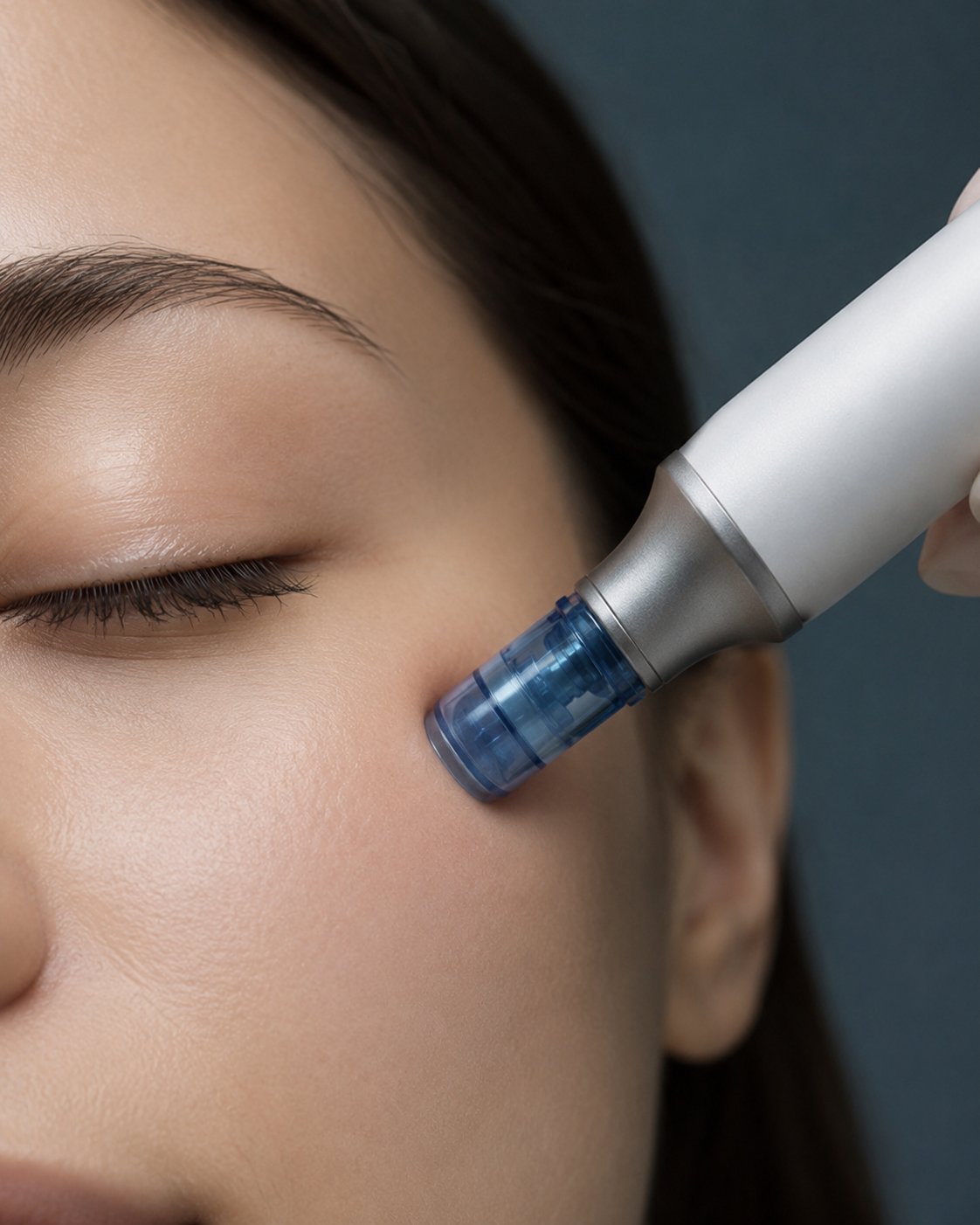
At Éclat & Harmonie Clinic Studio in London NW5, we offer treatments designed to address pigmentation at a deeper level than topical products can reach. Chemical peels using targeted acids can accelerate the turnover of pigmented cells. Microneedling can improve the penetration and efficacy of depigmenting agents. Advanced protocols can be matched to your specific type of pigmentation, skin tone, and treatment history.
Our approach always begins with a thorough consultation. Pigmentation is complex, and it can be driven by UV exposure, hormones, inflammation, medications, or a combination of factors. Identifying the underlying cause is essential for choosing the right treatment strategy. Our practitioners assess each client's pigmentation type and skin characteristics to develop a personalised plan.
It is also worth noting that certain types of pigmentation require particular care. Darker skin tones, for example, carry a higher risk of post-inflammatory hyperpigmentation from aggressive treatments, making a cautious, graduated approach especially important. This is one area where professional guidance can make the difference between improvement and inadvertent worsening.
Niacinamide remains an excellent foundation ingredient, gentle, proven, and effective for mild to moderate pigmentation concerns. For deeper or more persistent hyperpigmentation, combining topical niacinamide with professional treatments at our Kentish Town clinic can deliver the thorough results that neither approach achieves alone.
If uneven skin tone is affecting your confidence and you are ready to explore your options, book a consultation at Éclat & Harmonie Clinic Studio. All treatments are administered by qualified, registered practitioners.